


What a Crypto Calculator Does and Doesn’t Do
If you’re new to Bitcoin, a crypto calculator can be your safe starting point
You might feel lost with Bitcoin. Prices jump up and down every crypto week. News talks about trump crypto, new rules like a crypto market structure bill, and scary stories about why is crypto crashing again.
It is a lot.
A simple crypto calculator can calm things down.
 Instead of guessing, you can type in a few numbers and see, in plain dollars:
- How much Bitcoin you might get
- What your profit or loss could be at a future price
- How your plan changes if the price drops
No rush. No real money at risk. Just numbers on a screen.
In 2026, scammers know many beginners feel confused and afraid of missing out. Crypto fraud is rising fast, with billions lost to lies and fake promises about “guaranteed” returns and free crypto offers that are not real at all.[
Government and risk experts warn that many of these scams use high-pressure tricks and very complex stories to pull people in.](https://www.chainalysis.com/blog/crypto-scams-2026/) A basic profit and loss calculator helps you slow down and test claims yourself before you move a single dollar.
Here is what a crypto calculator can do for you:
-
Estimate profit and loss
You can enter:- The price where you might buy
- The price where you might sell
- How much you plan to put in
Then you see, in seconds, how much you could gain or lose at different prices. This matters a lot when the market feels wild or when the coin image on your app looks like it is “going to the moon.”
-
Plan dollar cost averaging (DCA)
Many new buyers do not put all their money in at once. They spread it out, for example, the same amount every week or month. This is called dollar cost averaging. A crypto calculator can show you what happens if you buy a little each time, even if prices move up and down. You can compare “all in now” with “slow and steady” and see which feels safer for you. -
Preview before you buy crypto with a debit card
If you plan to buy crypto with debit card payments, a calculator lets you test fees, amounts, and price targets first. You can see, “If I put in this much today and sell at that price later, is it even worth it after fees?”
This guide will stay simple. No hard math. No big words like APY formulas, even though those matter in more advanced learning about returns.[
If you want to go deeper later, you can read clear primers on how interest and yield really work in finance.](https://www.fidelity.com/learning-center/smart-money/what-is-apy)
Here we will focus on:
- Which inputs in a crypto calculator actually matter
- Where beginners often make mistakes
- How to sanity check the result so it passes the “does this feel real” test
We will also talk about safety. Before you trust any site with your money or even your email, it helps to know how to judge if a trading platform is safe. You can use a simple safety first checklist for choosing a trading platform to spot red flags early.
If you like learning in small, clear steps, you may also enjoy the free Clicks and Trades email lessons. The Clicks and Trades newsletter shares beginner friendly crypto tips, safety checks, and slow, steady strategies, not hype.
When you are ready to keep learning with help instead of noise, you can Sign Up for the free newsletter and get new “walkthrough style” lessons sent right to your inbox.
What a Crypto Calculator Does (and Doesn’t): Set expectations the smart way
When you first open a crypto calculator, it can feel like magic. You type in numbers, and it shows big profit on the screen. It is easy to think, “So this is what I will make.”
Not quite.
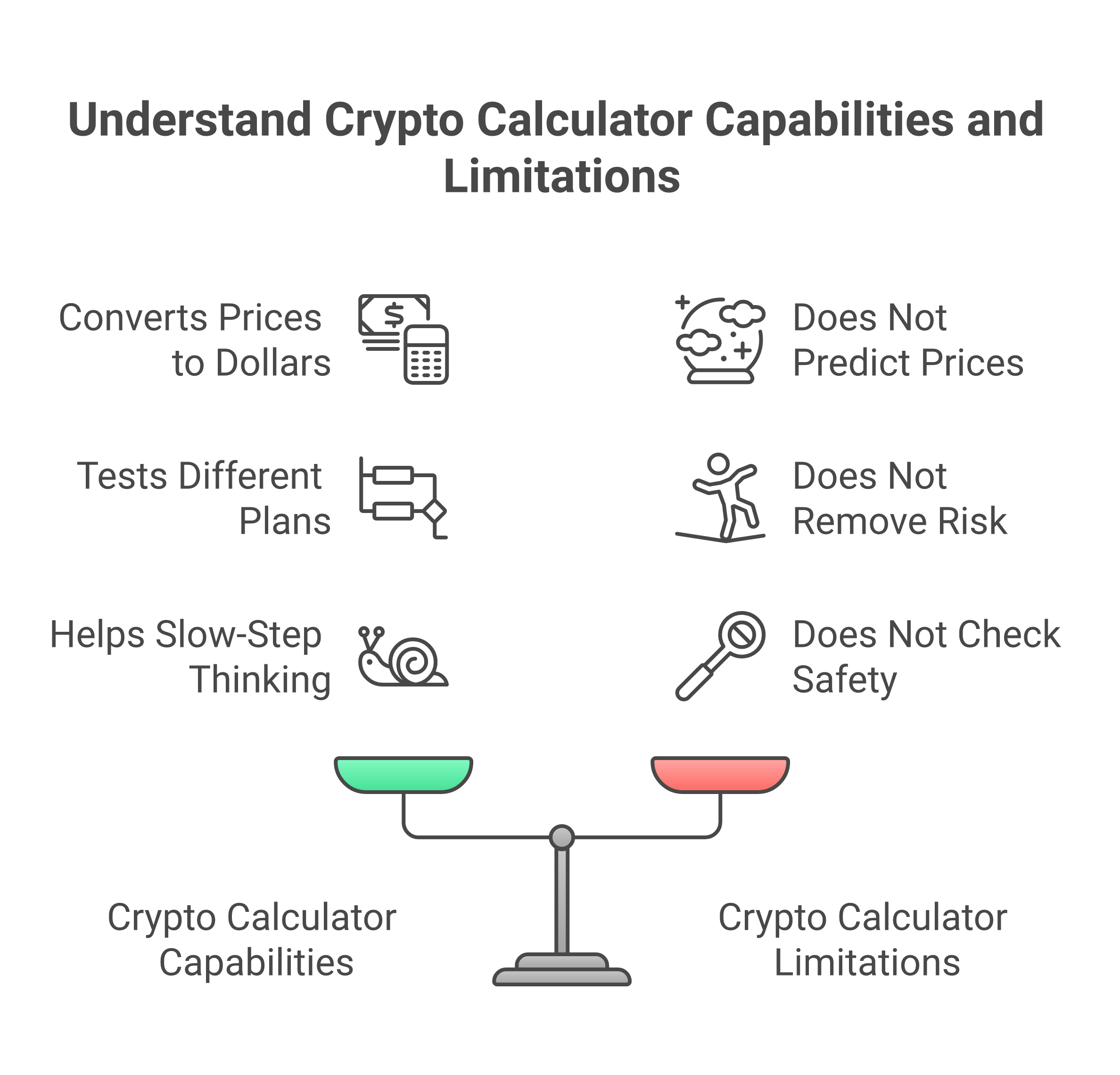
A crypto calculator is a math tool, not a crystal ball. It turns your inputs into estimates, not promises.
 Let’s set clear, simple expectations so you use it in a smart way.
What a crypto calculator does well
A good crypto calculator helps you answer calm “what if” questions, like:
- What if I buy at this price and sell at that price
- What if I spread my buys over time instead of going all in
- What if I buy crypto with debit card fees included, is it still worth it
Here is what it can do for you:
-
Turn prices into simple dollar amounts
You enter:
- Buy price
- Sell price
- How much money you put in
The calculator shows:
- How much crypto you get
- Your profit or loss at that target price
- Your percent gain or loss
This is very helpful when Bitcoin jumps 10 or 20 percent in a single crypto week and the news yells “pump” or “why is crypto crashing” again. You can step away from the panic and just look at the numbers.
-
Test different plans, not different futures
The calculator cannot know if talk about trump crypto, a new crypto market structure bill, or a big crash will send prices up or down. In 2026, even pro traders admit that major rules and news move the market in ways nobody can fully predict.[
For example, experts note that new regulations and shifting flows make future crypto moves very hard to call with certainty.
 ](https://blog.kraken.com/crypto-education/crypto-markets-in-2026)
What the calculator can do is let you test:
- “What if I buy a little each month”
- “What if I wait for a lower price”
- “What if the price falls 30 percent, how bad is that for me”
So you plan ranges, not exact outcomes.
-
Help you think in slow, steady steps
Many people use dollar cost averaging, which means you invest the same amount on a regular schedule, no matter what the price is doing.[
Large firms explain this as a way to spread out your buys over time instead of trying to guess the best day.](https://www.fidelity.com/learning-center/trading-investing/crypto/dollar-cost-averaging)A crypto calculator lets you:
- Compare “all in today” with “spread out over 6 months”
- See how your average buy price changes
- Decide which path helps you sleep better
-
Show how fees change the real picture
If you buy crypto with debit card payments, you often pay extra fees. The calculator can help you see:
- How much of your money goes to fees
- How high the price must rise just to break even
- Whether a different payment method might be cheaper
This is a simple way to check if a “free crypto” offer is real, or if hidden fees quietly eat your gains.
What a crypto calculator does not do
It is just as important to know what the tool cannot do.
-
It does not predict future prices
The calculator does not:
- Read charts
- Follow news
- Track new laws
- “Know” when a coin image on social media is about to pump
When you type in a “future price”, that number comes from you, not from the calculator. You are telling it, “Please show me what happens if this price ever happens.”
If someone says, “My crypto calculator shows you will double your money,” they are not telling the full truth. The tool is only running math on the price they picked.
-
It does not remove risk
Even the best math cannot stop:
- A sudden crash
- A new rule that hurts a token
- A hack on a weak trading site
In 2026, rules and safety checks got stricter in many places, but risk did not vanish.[
Legal experts explain that crypto is now under more clear laws, but that does not make any single trade safe by itself.](https://www.globallegalinsights.com/practice-areas/blockchain-cryptocurrency-laws-and-regulations/usa/)Your crypto calculator can show “what if I lose 50 percent”, but it cannot stop that loss from happening.
-
It does not check if a platform is safe
The calculator:
- Does not read terms and conditions
- Does not rate exchanges
- Does not spot scam sites
You still need your own safety checks. Before moving real money, you can use a simple safety first checklist for choosing a trading platform to look for red flags like unclear fees, fake reviews, or no support.
How to think of your calculator: “What if machine,” not “Will happen machine”
A helpful way to see it:
-
Good use:
“What if I buy $50 of Bitcoin each week for a year, and the price range is between this low and this high. What happens to me in each case” -
Risky use:
“This calculator proves the price will reach this target, so I should borrow money to buy more right now.”
When you treat it like a “what if machine,” you stay in control. You can plan for:
- A good case
- A middle case
- A bad case
This makes it easier to ignore hype about trump crypto, sudden news, or that one wild coin image that friends send you in chat.
If you like this clear, slow way of planning, you might also enjoy the free Clicks and Trades newsletter. It shares simple lessons that build on tools like a crypto calculator, so you can keep learning without getting lost in jargon.
When you feel ready for more step by step help in your inbox, you can Sign Up for the free email lessons and keep turning confusing “what if” thoughts into calm, simple plans.
Core inputs explained: price sources, fees, slippage, taxes, and time horizons
You can only trust a crypto calculator if you feed it good numbers. If the inputs are off, the outputs look sweet, but your plan is not real.
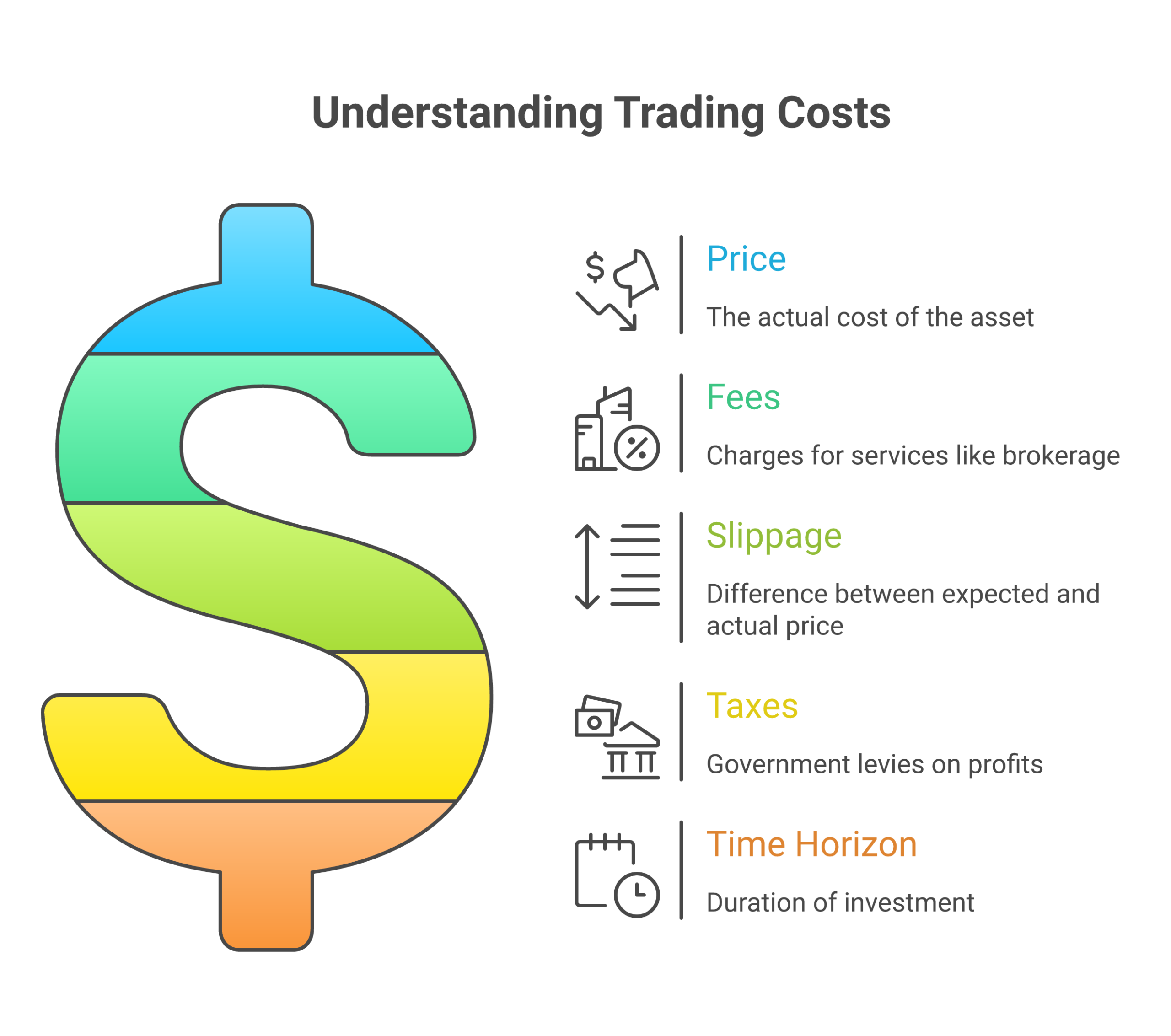 Let’s walk through the big five inputs you should know.
1. Price: which number are you using?
When people ask “why is crypto crashing” or “why did trump crypto news move the chart,” they often look at one single price. Your calculator gives you a choice.
Common price inputs:
-
Last trade price
The price of the most recent trade on that exchange. It can jump around fast in a wild crypto week. -
Average price
Some tools use a 24 hour average or a “fair value” price from many exchanges. -
Your own buy price
This is the real one that matters for your profit, what you actually paid, with fees.
Here is the key part:
If you change the price source, you change the result.
So, pick one style and stay with it for that plan. If you buy crypto with debit card at one exchange, then compare it to a “global average” price, your gains might look bigger than they really are.
2. Fees: the quiet line that can flip profit to loss
Fees are not fun to think about, but they are very important. A small percent on every trade adds up.
Your crypto calculator should have inputs for things like:
- Trading fee percent
- Network or gas fees
- Extra card or bank fees when you buy crypto with debit card
- Any “service fee” in fine print
Many exchanges use a maker and taker fee model. Makers place limit orders and often pay lower fees, while takers use market orders and usually pay higher fees because they remove liquidity from the book.[
A simple maker versus taker guide explains that taker orders that fill right away tend to cost more than resting maker orders.](https://www.bitpanda.com/en/academy/what-are-maker-fees-and-taker-fees-for-cryptocurrency-traders)
Two tips for your calculator:
- Always enter both buy and sell fees
- Try a “high fee” and “low fee” case to see how much they change the final number
In 2026, some platforms brag about “lowest crypto exchange fees”, but careful reviews show that the real, all in cost can still be larger once you add spreads and hidden charges.[
One 2026 fee breakdown shows how headline maker and taker rates are only part of your total cost.](https://westafricatradehub.com/crypto/lowest-crypto-exchange-fees-in-2026-what-really-determines-your-total-cost/)
If you like slow, careful planning, this is where the free Clicks and Trades newsletter can help. It shares simple fee and cost tricks, so you do not let “free crypto” offers fool you.
3. Slippage: the price you wish vs. the price you get
Slippage is the small gap between:
- The price you expect
- The price you actually receive when the order fills
This gap gets bigger when:
- The market moves fast
- The coin is small with low volume
- You use a big market order instead of a limit order
Good crypto calculators let you add a slippage percent. For example:
- You aim to sell at $50,000
- You add 1 percent slippage
- The calculator treats it like you sold at $49,500
Slippage can turn a neat profit into “almost break even.” So do not skip that field, even if it feels tiny.
4. Taxes: the line almost everyone forgets
Your calculator can show a big profit. Your tax bill may tell a different story.
In many places in 2026:
- Selling crypto, or swapping into another coin, can be a taxable event
- Short term gains are often taxed like normal income
- Long term gains, on coins you held for over a year, may face lower tax rates[
A 2026 crypto tax guide notes that long term crypto gains often get special rates, while short term gains can be taxed at higher income brackets.
 ](https://www.nerdwallet.com/investing/learn/crypto-tax-rate)
You do not need to be a tax pro to use a crypto calculator well. Just:
- Add a simple “tax percent” to your gain line
- Run two cases
- Before tax
- After tax
Also note, new rules in 2026 mean more brokers now report crypto trades and cost basis to tax offices, which makes hiding mistakes much harder.[
Some tax updates explain that centralized exchanges will report capital gains and losses on special forms starting with 2026 trades.](https://coinledger.io/blog/cryptocurrency-tax-rates)
If taxes feel scary, that is normal. You can start small and learn. Later, you can watch one clear video, like this short guide on ways to reduce your tax bill on stocks and crypto, and then come back and update your calculator inputs.
5. Time horizon: how long are you really holding?
A “quick flip” and a “five year plan” should not use the same settings in your crypto calculator.
Your time horizon changes:
- How much slippage and fees matter
- How much a tax rule affects you
- How you feel about big price swings around news, like a new crypto market structure bill or trump crypto headline
For a short trade, you might:
- Use a narrow price range
- Focus hard on fees and slippage
- Assume short term tax rates
For a long hold, you might:
- Test wide price ranges
- Include many buys over time
- Assume long term tax rules
- Plan around life events, like when you might actually need the money
The key is to match your calculator inputs to your real life, not to one loud coin image on social media that shouts “to the moon.”
Put it together: build one honest test case
When you sit down with your crypto calculator, try this simple checklist:
- Pick one clear price source and stick with it
- Add all fees you can think of, both in and out
- Include a small slippage percent
- Add a rough tax percent, even if it is only a guess
- Set a real time horizon, short or long, and write it down
If you are not sure your platform is safe before you plug in real plans, walk through this simple safety first checklist for choosing a trading platform. It will help you spot weak sites before you trust their prices or fee tables.
Want help turning these inputs into calm habits, not guesswork Every week, the free Clicks and Trades newsletter walks through real world examples in plain language, so you can practice with tiny numbers before you risk more.
When you are ready to keep learning in small, clear steps, you can Sign Up for the free email lessons and keep building crypto plans that match your real life, not the hype.
Step by step: Use a Bitcoin profit / loss calculator (beginner workflow)
A crypto calculator can look scary at first. Lots of boxes, lots of numbers. Let’s slow it down and walk through a simple, beginner friendly workflow, one small step at a time.
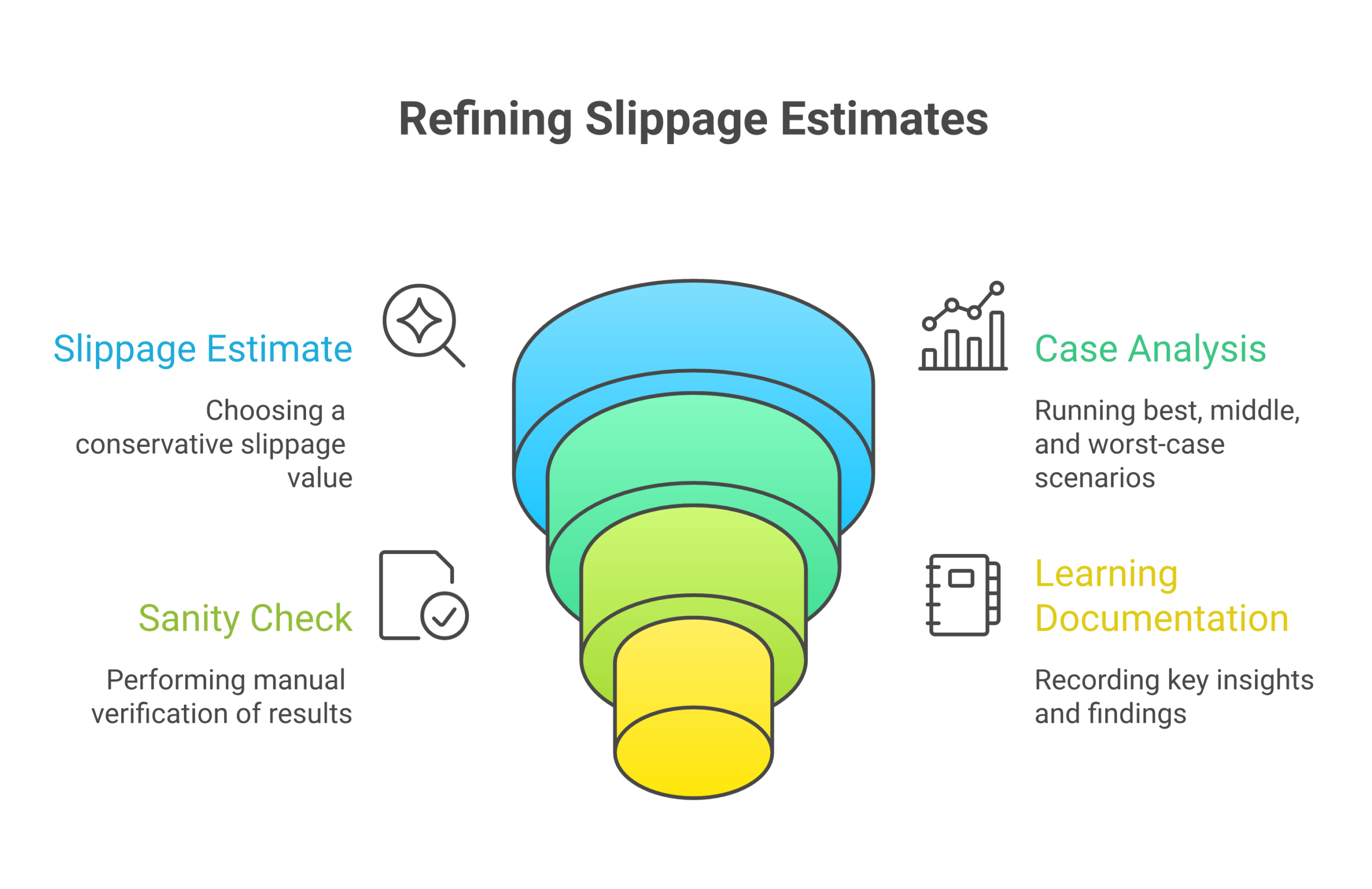 You can use this same flow in a wild crypto week, when a trump crypto headline hits, or on a quiet day when you just want to see “what if” without risking real money.
Step 1: Gather your inputs before you click anything
Take 2 to 3 minutes and write things down first. This makes you calmer and helps you avoid clicks and mistakes.
You need:
-
Amount of Bitcoin
How many BTC do you hold, or plan to hold
Example:0.05 BTC -
Your entry price
What you really paid, including any fee on the buy
If you used a market order, you likely paid a taker fee, which is usually higher than a maker fee on many exchanges.[
A clear maker and taker guide notes that market orders that fill right away often have higher taker fees than resting limit orders.](https://www.bitpanda.com/en/academy/what-are-maker-fees-and-taker-fees-for-cryptocurrency-traders) -
Your planned exit price
The Bitcoin price where you think you might sell
This is not a promise, just a test point -
All fees
Write both ways:- Buy trading fee percent
- Sell trading fee percent
- Any network fee you paid, or expect to pay
- Any extra cost if you buy crypto with debit card or use a bank transfer
-
Tax rate guess
A simple percent, like 20 percent or 30 percent, based on your local rules and how long you think you will hold. In many places in 2026, short term gains can be taxed at normal income rates, while long term gains, on coins held over one year, may get lower capital gains rates.[
A recent crypto tax guide explains how long term and short term crypto gains can face very different tax bands in 2026.](https://www.nerdwallet.com/investing/learn/crypto-tax-rate)
You can keep these in a small note on your phone, or on paper. The important part is to have them ready before you touch the crypto calculator.
If you are not sure your exchange is safe enough for these plans, you can pause here and walk through this safety first checklist for choosing a trading platform. It will help you judge if the prices and fee info you see are worth trusting.
Step 2: Pick a conservative slippage estimate
Next, think about slippage. This is the gap between the price you hope for and the price you may really get.
To keep it simple:
- For big coins like Bitcoin in a calm market, you might start with 0.5 to 1 percent
- If the market is very jumpy, or the coin is small, you might test 2 to 3 percent or more
In the crypto calculator:
- Find the box for slippage or “price impact”
- Start with a conservative number
- That means assume things go a bit worse than you wish
- Use the same slippage for both buy and sell, unless you have a strong reason to change it
If you look at the chart and wonder “why is crypto crashing so fast,” that is a clue to use a higher slippage percent for that test. Big news days, like a new crypto market structure bill or loud trump crypto story, can move prices very quickly.
Step 3: Run three cases, not just one
Most beginners type in one target price and stop. That gives you a fake sense of control. Prices move in ranges, not straight lines.
Use your crypto calculator to test three simple cases:
-
Middle case
- Your main target price
- Example: You think BTC could reach $60,000
- Enter this as your sell price
-
Best case
- A price that would feel great but still possible
- Maybe 20 to 30 percent above your middle case
- Example: $75,000
-
Worst case
- A lower price that still feels realistic if bitcoin drops
- Example: price falls 20 to 30 percent from today
Run the calculator for each case, with:
- The same amount of BTC
- The same fee setup
- The same tax rate
- A conservative slippage number
You will see three outputs:
- Profit or loss before tax
- Profit or loss after tax (if your tool has that box)
- Final cash you might end up with
This simple range view makes you less shocked if price goes against you. It turns the coin image in your app from “to the moon” hype into real life numbers you can plan around.
If you like learning this kind of step by step thinking, the free Clicks and Trades newsletter often walks through best, worst, and middle cases in plain language, using tiny trade sizes, so you can see how this looks in practice.
Step 4: Sanity check with a quick hand calculation
To build real trust in your crypto calculator, do a fast, rough hand check on your middle case.
 Use this simple flow:
-
Find your gross gain
- Middle sell price minus your buy price
- Multiply by your BTC amount
Example:
- Buy at $40,000
- Sell at $60,000
- Gain per BTC is $20,000
- For 0.05 BTC, gain is $1,000
-
Subtract total fees
- Add buy fee plus sell fee plus network fees
- Example: total fees are $40
- New gain: $1,000 minus $40 equals $960
-
Subtract tax (rough)
- If your tax guess is 20 percent
- Tax: 20 percent of $960 equals $192
- After tax profit: $960 minus $192 equals $768
Now look at what the crypto calculator shows for your middle case:
- If it is close, great, you can trust it more
- If it is very far off, check:
- Did you use the same fee numbers in both places
- Did you mix up entry price and exit price
- Did you forget to enter slippage in one of them
This small hand check trains your brain. Over time, you will get a “feel” for what is normal profit and what looks too good, like fake free crypto promises.
Step 5: Write down what you learned
Your last step is not about math. It is about habits.
After you use the crypto calculator, write down:
- Your three test prices, best, middle, and worst
- The after tax profit or loss in each case
- How that number makes you feel
If the worst case loss is more than you can sleep with, that is a sign to:
- Lower your trade size
- Change your time frame
- Or maybe skip the trade for now
You can keep a tiny “trade log” like this in a notebook or note app. Each time you do it, you become less reactive to “why is crypto crashing” headlines and more focused on your own clear plan.
When you want more support, you can get slow, calm help in your inbox. The free Clicks and Trades lessons come once a week and break down crypto tools, taxes, and fees in plain words. If that sounds useful, you can Sign Up and keep building your crypto skills one simple step at a time.
Plan calmly with DCA and goal-based calculators
So far, you used a crypto calculator to test one trade. That helps. But what if you just want to build a small Bitcoin stack over time, without chasing every trump crypto headline or asking “why is crypto crashing” every wild crypto week?
This is where DCA calculators and goal-based calculators help you breathe.
 —
—
What is DCA, in plain words?
Dollar cost averaging (DCA) means:
- You pick a small fixed amount of money
- You buy on a regular schedule, like every week or every month
- You keep going, whether the price is up or down
So instead of trying to “time the bottom,” you just show up again and again.
In 2026, many investors like DCA for crypto because prices can jump and crash fast. A simple, steady plan can lower stress in sharp moves and bear markets.[
A recent guide on dollar cost averaging for crypto explains how investing the same amount at regular times can help smooth out your average entry price, even in a very jumpy market.
 ](https://www.fidelity.com/learning-center/trading-investing/crypto/dollar-cost-averaging)
A DCA crypto calculator takes this idea and turns it into numbers.
How a DCA calculator keeps you steady
A DCA calculator usually lets you enter:
- How much you plan to invest each time
- How often you buy, like weekly or monthly
- How long you plan to keep buying, like 1, 3, or 5 years
- A simple guess for average growth or price path
Then it shows things like:
- Total cash you put in
- How many total coins you might collect
- A range of ending values under different growth guesses
This is not about “free crypto” or magic gains. It is about seeing what can happen if you just keep going, even when a scary crypto market structure bill or news story hits and feeds your fear.
Some newer data models in 2026 show that steady DCA into Bitcoin across many years has given strong gains in a wide range of past cycles, even when price had deep drops.[
One 2026 analysis shows how regular fixed purchases into Bitcoin can still build value across very different market cycles, even when short term moves are harsh.](https://bingx.com/en/news/post/data-models-show-bitcoin-dollar-cost-averaging-yields-strong-gains-across-past-and-projected-cycles)
The key word is can, not will.
Use goal-based calculators to answer “what will it take?”
A goal-based calculator flips the question. Instead of asking:
“What will my stack be worth someday?”
you ask:
“How much do I need to set aside to reach a clear money goal?”
For example:
- “I want $5,000 in Bitcoin in 5 years”
- “I want to buy one full BTC before my child turns 18”
A basic goal calculator will:
- Ask your target amount
- Ask your time frame
- Ask for a growth rate guess
- Tell you how much to save each month or week
This feels less like watching a coin image move on a chart and more like planning for a real life goal.
When you see the number you need to set aside, you can check if that fits your real budget. If it does not, you can lower the goal, stretch the time, or look for extra income before you start to buy crypto with debit card or bank transfers.
If you want to keep your plan on safe rails, it also helps to pair this with the safety first checklist for choosing a trading platform before you set any auto buys.
Treat growth and backtests as “what if,” not truth
Here is the part many people skip.
Most DCA and goal-based calculators will show:
- A growth rate, like “10 percent per year”
- Or a “backtest” that shows how a plan would have worked in old data
In normal finance, that kind of yearly growth rate is often wrapped into a number called APY, which already bakes in the effect of compounding interest over a full year.[
A clear APY guide explains that annual percentage yield shows the real yearly growth when interest compounds over time, not just the simple rate.](https://www.fidelity.com/learning-center/smart-money/what-is-apy)
Crypto is more wild than a simple savings account. So treat every growth number as a rough picture, not a promise.
Simple rules:
- Backtests show what would have happened in the past, not what will happen next
- High growth examples are illustrations, not guarantees
- In a crash year, even a nice DCA plan can be down for a while
Some 2026 studies even show that in a few past periods, a one time lump sum into Bitcoin beat a slow DCA plan.[
One recent 2026 review found that lump sum investing beat weekly DCA in many past tests, which is a good reminder that no single strategy wins in every time window.](https://www.ainvest.com/news/bitcoin-2026-dca-math-market-flow-2603/)
That is why your DCA and goal tools should serve your risk level, not push you into bigger bets.
Make your plan match your real life
To use these tools in a calm, real way:
-
Start from your budget
- Pick an amount that would not break you if Bitcoin dropped 50 percent
- Think in “phone bill size” chunks, not “rent size” chunks
-
Pick a time frame that fits your goal
- Short term trade, use the profit and loss crypto calculator steps you saw earlier
- Long term build, lean on DCA and goal-based planning
-
Keep the rules simple
- “I buy every Friday, no matter what the trump crypto news says”
- “I stop and review if my income changes or if crypto takes over my money life”
-
Check your platform risk too
- Your DCA math does not help if your exchange fails
- Use the safety checklist linked above before setting any auto plan
A good crypto calculator setup is not just about numbers. It is about picking rules you can keep when your feelings spike.
If you like slow, steady learning, the free Clicks and Trades newsletter walks through DCA, simple goals, and risk checks in tiny steps, so you are not left alone with noise and hype.
When a calm plan beats hot headlines
In 2026, crypto moves anytime a big crypto market structure bill hits or a loud trump crypto story spreads. On those days, it is easy to think:
- “I should throw in a lump sum now”
- “I should quit, why is crypto crashing again?”
A DCA plus goal-based plan gives you another choice:
- You let your small auto buys run
- You check your goal calculator once in a while
- You make tweaks slowly, not in panic
You still need to respect risk, protect your accounts, and stay clear of any “guaranteed free crypto” pitch. But with the right tools, your plan can be:
- Small
- Boring
- And much easier to stick to
If you want gentle help turning these ideas into a real plan, you can get weekly, simple lessons in your inbox. They cover calculators, fees, and safety in the same plain style you see here. You can Sign Up any time and keep growing your crypto skills at your own pace.
Beyond buying: mining, staking, and yield calculators, proceed with caution
Once you learn how to use a simple crypto calculator for buying and DCA, it is tempting to click on the next shiny thing.
You might see:
- “Get 20% APY, stake now”
- “Earn free crypto while you sleep”
- “Turn this coin image into passive income this crypto week”
It sounds nice. But these “earn” tools can be tricky, even for people who have used Bitcoin for years.
Let’s slow it down.
What these “earn” calculators are trying to show you
There are three big types you may see:
- Mining calculators
- You type in: hardware cost, power cost, network difficulty
- It spits out: “You might earn X per day”
- Staking calculators
- You type in: how many coins you lock up and for how long
- It shows: a reward number in APR or APY
- Yield / farm calculators
- You type in: deposit size and time
- It shows: “projected income” from lending, pools, or other tricks
On the screen, the math may look clean and safe. In real life, every line hides many moving parts, like:
- Token price swings
- Network rules that can change
- Platforms that can fail or get hacked
So treat these tools as “what if” helpers, not as a plan to rush into.
APR vs APY, and why compounding matters
Before you even look at a yield calculator, you need one key idea:
- APR is a simple yearly rate, it does not count compounding
- APY is the real yearly growth after compounding is counted
In normal banking, APY shows how much you actually earn in a year when interest keeps adding to itself over time.[
A clear guide on annual percentage yield explains that APY is a normalized rate that already bakes in the effect of compounding over one year.](https://corporatefinanceinstitute.com/resources/wealth-management/annual-percentage-yield/)
A few simple tips:
- If two offers have the same APR, but one compounds more often, its APY will be higher
- A high APR with no compounding can be worse than a lower APY with strong compounding
- Crypto sites sometimes flash the big APY to make offers look sweet
A mining, staking, or yield crypto calculator may let you flip between APR and APY. Always check which one you are looking at, and remember that both are still guesses, not promises.
The risk side most calculators hide
Yield tools like to show the “up” side. Your job is to look for the “down” side that is not in the box.
Big risk buckets include:
- Lockups
- Some staking and farms lock your coins for days, months, or even longer
- If a sharp selloff hits and you ask “why is crypto crashing,” you may not be able to exit
- Protocol changes
- Rules can change after a crypto market structure bill, a fork, or a vote
- Your reward rate can drop, or the whole system can move to a new model
- Counterparty risk
- If you stake or lend through an app or exchange, you trust that middle person
- If that platform fails, your nice APY on paper will not save your funds
- Illiquidity
- Some coins are hard to sell in size without moving the price
- A calculator will not show you slippage or “no buyers” risk
This is why it is so important to judge any platform before you trust it. If you have not done that yet, walk through the safety first checklist for choosing a trading platform before you even think about staking or yield games.
Why “earn” math is harder than simple buying
With basic buying:
- You put in cash
- You get Bitcoin
- Your main risk is price and platform safety
With mining, staking, and yield:
- Your return depends on reward rules
- It depends on how often rewards compound
- It depends on token price, not just “interest”
- It may also depend on other users in the system
Even a very good crypto calculator cannot show you:
- Future hacks
- Future rule changes
- Future bans or new laws
- Future panic when a trump crypto headline hits
So if a tool makes the income look too smooth, or feels like “free crypto,” pause. Real returns are never free.
For beginners, it is okay to wait
If you are still:
- Learning how to buy crypto with debit card or bank transfers
- Getting used to price swings
- Working through your first DCA or goal plan
- Learning how to store coins safely
then it is not “weak” to skip mining and yield offers for now. It is wise.
A simple path many new users take in 2026:
- Learn what Bitcoin is and how it works
- Learn how to use a normal crypto calculator for trades and DCA
- Learn how to move and store coins without mistakes
- Only then, slowly study staking and yield risks
If you like slow, clear steps, the free Clicks and Trades newsletter stays at that basic level. It walks through simple tools, safety, and risk checks in short, plain lessons, so you do not feel pushed into complex yield tricks too fast.
How to treat mining, staking, and yield tools if you do explore
If you ever decide to test these areas later, use your calculators like this:
- Start with tiny test amounts
- Treat early steps like paid lessons, not income
- Run “bad case” numbers, not just “good case”
- Cut the APY in half and see if it still seems worth it
- Ask what happens if the token price drops 50 percent
- Check your exit plan
- How fast can you get out
- What fees and lockups apply
- Keep your core Bitcoin stack simple
- Do not risk the coins you need for your long term goals
- Use only extra funds you can stand to lose on yield games
Remember, your main job as a new user is not to chase every percent of return. Your main job is to stay in the game without blowing up.
If you want help keeping that calm focus, you can get weekly, friendly guides that match this plain style. They walk through buying, storage, risk, and tools in order, so you do not get lost in hype. You can Sign Up any time and learn at your own pace, one clear lesson at a time.
Trust and safety checklist: Vet any crypto calculator before you type a number
A crypto calculator can feel simple and safe. You type numbers, you see profit. But in 2026, scams and tricks are at record highs, with billions lost in fake tools and fake sites each year.A recent crypto crime report shows scams are still one of the largest sources of stolen funds, and many start with “investment tools” that look helpful.
So before you type any number into a mining, staking, or yield crypto calculator, walk through this short safety list.
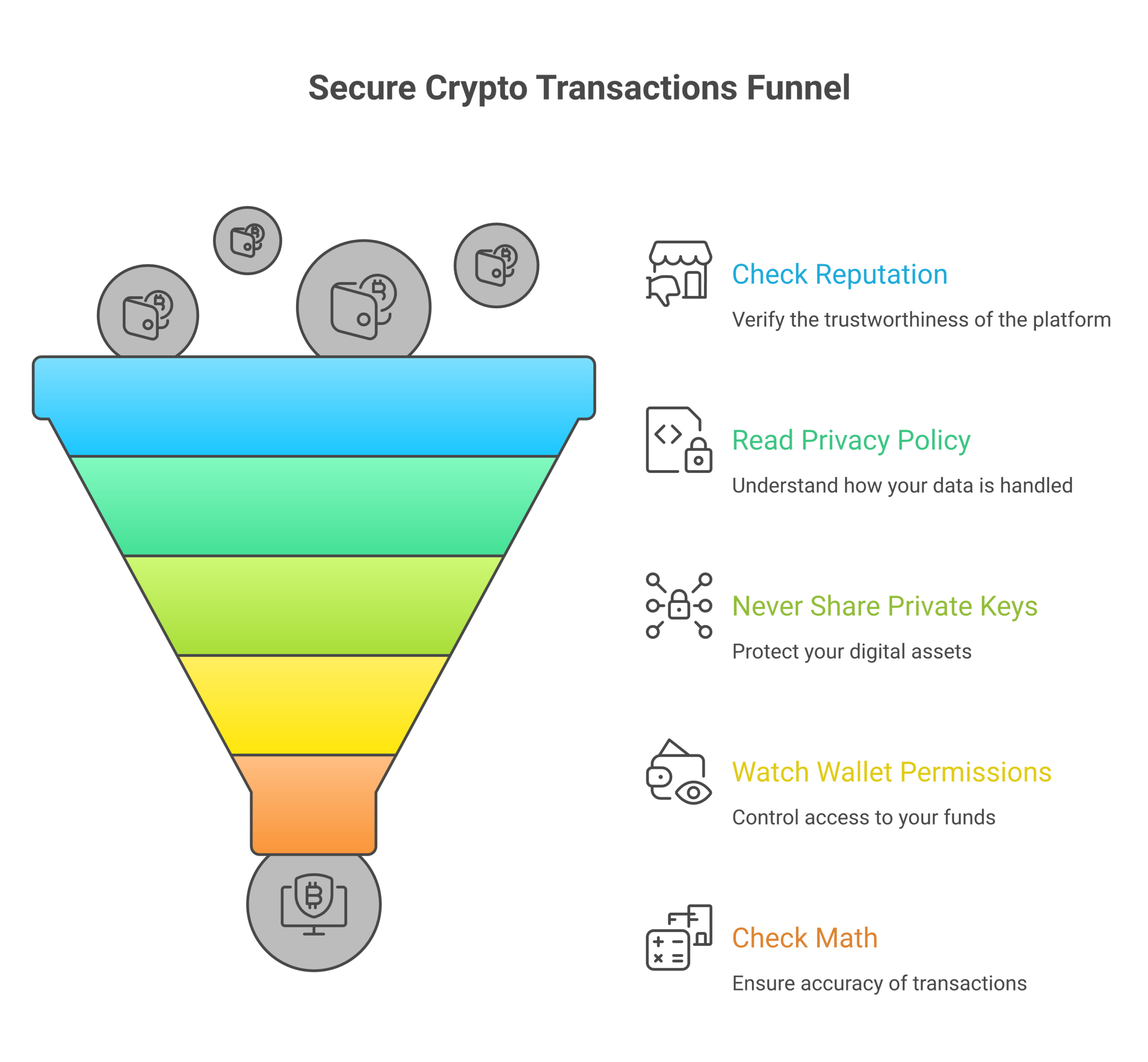 ### 1. Check the site, not just the tool
Look past the nice calculator box and check the whole site.
Ask yourself:
-
Who runs this site?
- Is there an “About” page, company name, or real team?
- Is it a random page with no real info, built around one coin image and hype?
-
Does the domain look real?
- Watch for tiny changes, like “bitc0in” instead of “bitcoin”
- Beware pages that copy known brands or news about trump crypto or “this crypto week only” deals
-
Is the offer built around fear or FOMO?
- “Why is crypto crashing? Use our bot to fix it”
- “Only today, get 200 percent APY”
If the whole page is pushy, or only talks about huge gains and “free crypto,” click away.
If you are not sure how to judge a site, it can help to review the safety first checklist for choosing a trading platform. Many of the same habits apply to any crypto calculator too.
2. Read the privacy and data rules
A calculator should need very little from you. Often it only needs:
- A coin type
- A price guess
- Your planned deposit or DCA amount
That is it. No real name. No ID. No bank card.
In 2026, many crypto sites collect way more data than they need, like full ID docs and personal details, just to offer basic tools.Experts note that users often hand over personal data in crypto for simple services, which raises real privacy risks.
Before you use a crypto calculator:
- Look for a clear privacy policy link
- Check if they sell or share data with “partners”
- Avoid sites that ask for login or KYC just to use a simple calculator
If a page makes you sign up and “buy crypto with debit card right now” before you can even test numbers, that is a red flag.
3. Never share seed phrases or private keys
This part is simple:
A real crypto calculator will never need your seed phrase or private key. Ever.
So if any tool:
- Asks you to “import wallet” by typing a seed phrase
- Says “connect wallet and enter recovery words to unlock full profit view”
- Wants you to paste a private key
close the page at once. That is not a calculator, that is a theft script.
Even when a calculator uses a normal wallet connect button, slow down. A yield tool might ask you to connect a wallet to read your current balance, which can be fine, but:
- Check that you are on the right domain
- Check what the wallet pop up says you are giving permission for
- Cancel if it asks to move coins or give broad “spend” rights without a clear reason
In 2026, many scams use fake tools and fake wallet prompts to drain funds, not just fake trading bots.Consumer alerts warn that “investment tools,” bots, and fake dashboards are a common hook in modern digital asset fraud.
So keep a firm rule: seed phrases stay offline, on paper, never in a web form.
4. Watch what permissions your wallet is giving
If a calculator lets you connect a wallet, treat that step like signing a contract.
Basic checks:
- Read the message in your wallet app.
- Is it “view balance” only, or “spend unlimited” on a token?
- Avoid “unlimited approvals” for random sites.
- A simple DCA or profit tool does not need broad spend access
- Disconnect later.
- After you use the tool, go into your wallet and remove its access
If it feels too complex, you can skip wallet linking and just type numbers by hand. Your safety is more important than any “instant read” feature.
5. Check the math with a second source
Even a safe site can make mistakes, or leave out fees.
To protect yourself:
- Use two different calculators.
- Run the same input on another site and see if the result is close
- Do a rough hand check.
- For example, if you plan to put in $100 at 10 percent APR for one year with no compounding, you should expect about $10 in interest, not $100
- Look for missing pieces.
- Does the tool include trading fees and network fees?
- Does it include maker or taker fees if you trade on an exchange, which can change your real return?Basic guides to maker and taker fees show that market orders often pay more, and fees can eat into profit, especially on small trades.
If one calculator shows a much higher “profit” than others, it might be using very kind guesses, or it might be built to lure you in.
6. Match the tool to real rules and laws
In 2026, laws around mining, staking, and yield keep changing. Regulators now talk more about how they treat airdrops, protocol staking, and wrapped tokens.Recent guidance from the SEC explains how federal securities laws can apply to things like protocol mining and staking rewards.
A risky calculator will:
- Ignore any legal risk
- Promise that rewards are “100 percent safe”
- Act like new rules or a crypto market structure bill will never touch you
A better tool will:
- Add clear risk notes
- Remind you that rewards can change
- Not push you to act “before new rules hit this crypto week”
Keep in mind, a calculator cannot protect you from bans or policy changes, no matter how nice the curve looks on screen.
7. Use small tests and keep your info light
Even after all this, you might still want to try a new crypto calculator for mining, staking, or DCA.
Use these habits:
- Start with fake or tiny numbers first
- Do not link bank accounts just to “save settings”
- If you later choose a platform to act on the plan, research that platform from scratch
- Keep your main Bitcoin stack and your long term goals away from any high risk yield tricks
If you like having someone walk beside you with simple steps, the free Clicks and Trades newsletter shares slow, clear lessons on tools, safety, and planning. It stays in plain language, so you are less likely to get pulled into risky “free crypto” offers.
When you are ready for gentle support each week, you can Sign Up and get short guides that help you read any crypto calculator with calm eyes, not hype.
Common mistakes and how to sanity-check results by hand
A crypto calculator can look smart. Nice chart, glowing coin image, big “profit” number.
But small math slips can turn a “safe” plan into something very different from real life.
Let’s walk through a few common mistakes and how you can check the numbers by hand in a calm, simple way.
1. Forgetting fees, spreads, and taxes
Most basic calculators pretend trades are free. Real trades are not free.
In real life you pay:
- Trading fees on the exchange
- A spread, which is the gap between buy and sell price
- Network fees to send coins
- Maybe taxes on gains in your country
Many exchanges charge different maker and taker fees. Makers add orders and often pay less. Takers use market orders and often pay more, so your real cost per trade can be higher than what the “headline” fee shows.Guides to maker and taker fees explain that taker orders usually have higher costs, which can eat into profit over time.
If your crypto calculator ignores all this, results will almost always look too good.
Quick hand check for fees
-
Add up how many trades you will make
- Example: buy once a week for a year
- That is about 52 trades
-
Guess a fee rate
- Simple guess: 0.2 percent per trade
- On a $100 buy, 0.2 percent is $0.20
-
Multiply
- $0.20 fee × 52 trades ≈ $10.40 in fees for the year
Now compare:
- Calculator profit without fees
- Profit after you subtract at least $10 to $20 in fees and some network costs
If your “win” shrinks a lot once you add fees, you know the tool was a bit too kind.
If you want a deeper fee walk through before you even touch a calculator, the safety first checklist for choosing a trading platform can help you spot costly platforms and tricky pricing.
2. Mixing up APR and APY
Many crypto sites love big numbers. A common trick is to blur the line between APR and APY.
- APR is the yearly rate with no compounding
- APY is the yearly rate with compounding
APY is always equal to or higher than APR for the same base rate, because you earn on top of past interest. So if your crypto calculator quietly swaps APR and APY, it can make returns look bigger than they really are.
Simple hand check
Let’s say:
- You put in $1,000
- The page says 10 percent “yield” for one year
Do this by hand in two ways.
-
If it is APR, no compounding
- 10 percent of $1,000 is $100
- End of year: $1,100 total
-
If it is APY with monthly compounding
You do not need full math. Just know this:
- 10 percent APY with monthly compounding will end a little above $1,100
- It might be around $1,104 to $1,105
So if a calculator shows:
- 10 percent “APR”
- But says you end with $1,200 in one year
you know something is off. It is either:
- Using a higher real rate than it shows
- Using a longer time frame than one year
- Or just selling you a dream
When a trump crypto ad, or a “this crypto week only” promo, uses loud APY numbers but hides how they are calculated, pause. Do the quick $1,000 at 10 percent check in your head. If the growth looks much larger than that, be careful.
3. Ignoring taxes and “why is crypto crashing” moments
Most crypto calculators use smooth lines. Real markets jump up and down.
In 2026, Bitcoin and other coins still move fast when news hits, when a new crypto market structure bill is in the news, or when hot themes like “free crypto airdrop” pull in short term traders.Big market education guides note that sharp moves and changing flows are normal in crypto and make timing very hard to predict.
Two big gaps most tools skip:
- Taxes
- In many places, each sell, swap, or “harvest” can trigger a tax event
- If your plan has lots of small trades, even a normal year can bring a tax bill
- Down years
- There will be times when friends ask “why is crypto crashing” again
- Your plan has to survive those months too, not just the best candles on a chart
Quick hand check for taxes and drops
You do not need full tax math. Just test a rough case:
- Say you expect $1,000 in gains from a plan
- Pretend 20 percent of gains go to taxes
- Real take-home would be about $800
Now ask:
- “If my gain is $800 after tax, do I still like this plan?”
- “What if price is 30 percent lower for one whole year, can I hold or keep my DCA going?”
If your answer is “no way,” then a pretty crypto calculator line is not enough. You need a plan that fits your nerves and your real rules.
4. Relying on backtests without drawdowns
Some tools let you “backtest” a strategy. For example:
- “If you had used this DCA tool on Bitcoin starting in 2018, you would have X dollars now.”
Backtests can teach you, but they have two big traps:
- They show the end result, not the scary middle
- They often pick a lucky start date
Studies on DCA often show that lump sum buys beat DCA in many past windows, yet DCA stays popular because it helps people stick with a plan when price swings and fear rise.Recent work on Bitcoin DCA notes that backtests often favor lump sums in strong bull runs, even though steady DCA can help real people stay invested through big drops.
How to sanity-check a backtest
Ask two things:
-
What was the worst drop on the way?
- Did the portfolio ever fall 30 percent, 60 percent, or more from the top?
- Could you have stayed calm in that drop without quitting?
-
What if I start at a bad time?
- Change the start year in the tool, if it lets you
- Or just imagine starting right before a big fall
If your plan only works in the “perfect” start year, it is not a solid plan. It is more like a lucky story.
This is also where a calm, simple voice beside you can help. The free Clicks and Trades newsletter breaks down ideas like DCA, backtests, and drawdowns in small, weekly steps so you are less likely to chase the last big chart you saw.
5. A tiny toolkit to check any crypto calculator by hand
Here are quick rules you can use with any crypto calculator result:
- Use a simple number test
- Swap in $100 or $1,000 and see if the gain looks roughly right for the rate shown
- Subtract basic costs
- Take off at least 1 to 3 percent for fees, spreads, and slippage over time
- Cut the forecast
- If a tool says you will double money in 1 year, ask how it would look if you only gain half of that
- Ask “what if I am wrong for two whole years”
- Prices can stay low longer than we think
If the plan falls apart the moment you add costs or bad years, treat the calculator as a toy, not a guide.
Want slow, clear help reading the numbers?
If all of this feels like a lot, that is normal. Crypto in 2026 is noisy, with hype about trump crypto, “new rules hitting this crypto week,” and wild “buy crypto with debit card now, get free crypto” deals on every corner.
You do not have to decode it alone. The free Clicks and Trades newsletter gives you short, plain-language emails on topics like:
- How to read any crypto calculator with clear eyes
- How to spot missing fees and tricky APY claims
- How to build a simple plan you can stick with even when charts go red
When you are ready for gentle, step by step support, you can Sign Up and learn at your own pace, with no rush and no pressure.
Summary
This article introduces beginners to crypto calculators as a safe, no-pressure way to explore Bitcoin investing without risking real money. It explains what crypto calculators can and cannot do, emphasizing they are math tools for "what if" scenarios, not crystal balls for future prices. The guide walks through essential inputs like price sources, fees, slippage, taxes, and time horizons, then offers a step-by-step workflow for using profit and loss calculators with conservative assumptions and multiple test cases. It covers dollar cost averaging and goal-based planning for long-term investors, addresses advanced tools like mining and staking calculators with clear caution, and provides a thorough safety checklist to vet any calculator before use. Throughout, the article highlights common mistakes such as forgetting fees, confusing APR with APY, and ignoring taxes, while teaching readers simple hand-calculation methods to verify results. The focus is on building calm, realistic plans that survive market volatility, scams, and regulatory changes in 2026.
