


How to Trade Bitcoin Safely: Your Beginner’s Checklist

Welcome: Your Safe Path to Understanding Bitcoin Trading
Feeling a little overwhelmed by the idea of learning how to trade Bitcoin?
You’re not alone. The world of crypto can seem like a wall of confusing charts, strange terms like order block trading, and constant warnings about scams. For someone just wanting to start trading, it’s easy to feel lost and worried about making a costly mistake.
Maybe you’ve wondered if you’re too late to the party, or you’ve heard stories about people getting caught by complex rules like the pattern day trader rule. The fear is real. In fact, studies on crypto trading psychology show that fear and a lack of a clear plan are among the biggest reasons new traders struggle. You want a safe, clear path forward, not a high-risk gamble.
That’s exactly why this guide exists. This isn’t about hot tips or get-rich-quick schemes. This is your structured, step-by-step walkthrough built on a foundation of security and trustworthy information. We believe the first step in learning how to trade is learning how to do it safely.
Before we talk about analyzing a trading deadline or the mechanics of a day trade, we start with the essentials: protecting yourself. We’ll cut through the jargon and break everything down into simple, actionable steps. Think of this as your personal checklist for navigating crypto with confidence.
A great place to begin building that confidence is by learning how to choose a secure platform. You can use our Safety First Checklist: How to Judge a Trading Platform to make sure your first steps are on solid ground.
We also know that ongoing learning is key. For clear, step-by-step lessons delivered right to your inbox, consider subscribing to the free Clicks and Trades newsletter. It’s a helpful resource for continued education without the overwhelm.
Ready to begin? Let’s build your knowledge from the ground up, the safe way.
Sign Up for more guides and take the first step on your secure trading journey today.
Trading 101: What "How to Trade" Really Means for a Bitcoin Beginner
Let’s start with the most basic question. When people talk about learning how to trade, what do they actually mean? In the simplest terms, trading is just the act of buying, selling, or holding an asset. In our case, that asset is Bitcoin.
Think of it like this:
- Buying is when you use your money to get some Bitcoin.
- Selling is when you trade your Bitcoin back for money.
- Holding (or "HODLing" in crypto slang) means you keep your Bitcoin in your wallet and don’t sell it.
That’s it at the core. But the real question is why and when you choose to do each of those things. This is where strategy comes in, and it’s the difference between two main mindsets: investing and active trading.
Investing vs. Trading: What’s the Difference?
It’s easy to mix these up, but they’re different journeys.
Investing is like planting an oak tree. You buy Bitcoin because you believe in its long-term value. You plan to hold it for years, maybe through many ups and downs, waiting for it to grow. Your main job is to choose a good asset and secure it properly. You’re not worried about short-term price swings. In fact, experts often recommend a "buy and hold" strategy for beginners because it avoids the stress and complexity of timing the market.
Active Trading is more like surfing.

You’re trying to catch waves (price movements) to make a profit. You might day trade, buying and selling within the same day. Or you might look for short-term swings over a few days or weeks. This involves watching charts, learning terms like order block trading, and understanding market timing. It’s exciting but comes with more risk and requires more time and emotional control. Studies on crypto trading psychology consistently show that a lack of a clear plan and emotional discipline are among the top reasons new traders struggle.
Why "Buy and Hold" Is the Smartest First Step
If your goal is to learn how to start trading the right way, the best first move is often to not be an active trader at first.
Here’s why:
- It Builds Confidence Without Major Risk: You learn how to buy Bitcoin securely and hold it. This gets you comfortable with the process without the pressure of making quick, stressful decisions.
- You Avoid Common Beginner Traps: Jumping straight into after market trading or complex strategies without a foundation is a recipe for mistakes. A 2026 report on cryptocurrency risks highlights that user error and a lack of strategy are leading causes of losses for newcomers.
- It Gives You Time to Learn: While your Bitcoin is safely held, you can take your time to truly understand the market. You can learn about proprietary trading firms or rules like the pattern day trader rule without risking your capital. You’re building knowledge first.
The table below sums up the best path for a total beginner:
| Your Goal | Recommended Starting Strategy | Why It Works |
|---|---|---|
| Learn Safely | Buy and Hold (Investing) | Reduces stress, avoids complex timing, and lets you learn the ecosystem without the pressure of active trading. |
| Grow Long-Term | Buy and Hold (Investing) | Historically, long-term holders have been rewarded for their patience through market cycles. |
| Understand the Market | Buy and Hold, Study on the Side | Provides a safe position while you use tools like our crypto calculator guide and other resources to learn. |
Remember, learning how to trade isn’t just about the act of buying and selling. It’s about building a foundation of knowledge and emotional discipline. Starting simple is not a missed opportunity; it’s the safest way to ensure you’re still in the game years from now.
For more step-by-step lessons that break down these concepts without the jargon, consider subscribing to the free Clicks and Trades newsletter. It’s a great way to continue your education at a comfortable pace.
Ready to take that first, simple step with confidence?
Sign Up for clear guides and build your knowledge the safe way.
Your Security First: Non-Negotiable Steps Before You Even Think of Trading
Before you learn how to trade, you must learn how to protect.
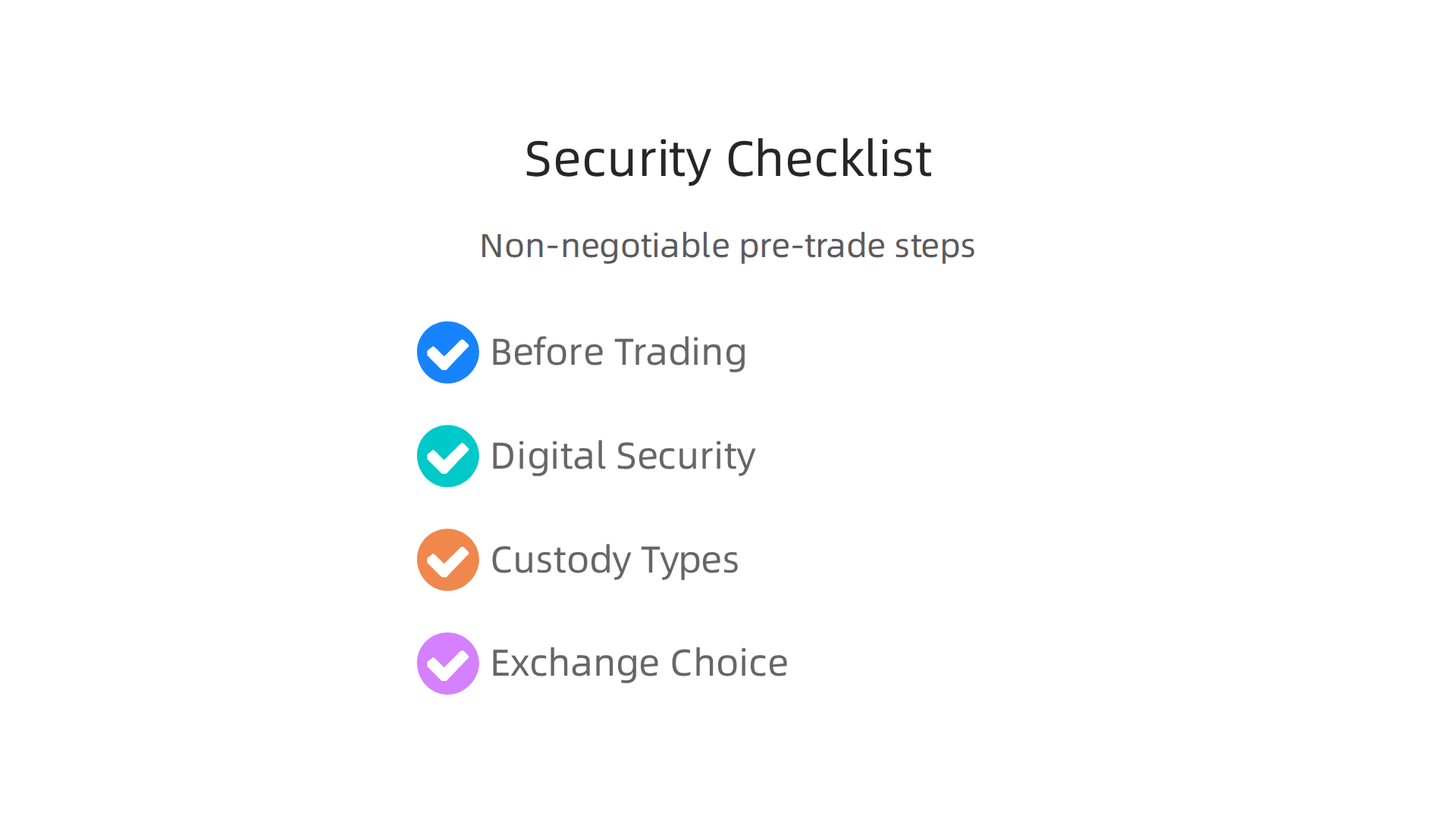
Think of it this way. You wouldn’t leave your life savings on the front porch. So you can’t leave your digital money unprotected online. Security isn’t just a feature. It’s the foundation your entire journey is built on.
Skipping these steps is the single biggest mistake beginners make. A 2026 FINRA report shows that cybersecurity rules for financial information are more critical than ever. Let’s make sure you’re not a statistic.
Lock Down Your Digital Life
First, protect yourself. Your personal cybersecurity is your first line of defense.
- Use a Strong, Unique Password: Do not use "password123" or your pet’s name. Use a long, random mix of letters, numbers, and symbols. Better yet, use a password manager to create and store them for you.
- Enable Two-Factor Authentication (2FA) Everywhere: This is non-negotiable. If a site asks for your password and then a code from your phone, that’s 2FA. It means a hacker needs your password AND your phone to get in. Always use an app like Google Authenticator or Authy, not SMS texts, which can be intercepted.
- Become a Phishing Detective: Scammers will send fake emails and texts that look like they’re from your exchange or wallet. They’ll ask you to "verify your account" or "claim a reward" and steal your login info. Never click links in unsolicited messages. Always go directly to the official website yourself.
Understand Where Your Bitcoin Lives: Custody
This is the most important concept in crypto. There are two ways to hold Bitcoin.
- Exchange Custody: When you buy Bitcoin on an app like Coinbase, it often stays in their digital vault. It’s convenient for trading. But remember the old saying: "Not your keys, not your coins." If the exchange gets hacked, shuts down, or faces legal issues, your money could be frozen or lost. You are trusting them completely.
- Self-Custody: This means you hold the "private keys" to your Bitcoin yourself, usually in a software or hardware wallet. You have full control. No one can freeze it. It’s the most secure way to store value long-term. For the "buy and hold" strategy we discussed, self-custody is the ultimate goal.
How to Choose a Safe Exchange
When you’re ready to start trading, you’ll need an exchange to buy and sell. Picking a safe one is crucial. Use this checklist. A good resource to walk you through this in more detail is our Safety First Checklist: How to Judge a Trading Platform.
- Regulation & Licensing: Are they regulated in your country? Look for mentions of licenses from bodies like the SEC or other financial authorities. A 2026 PwC report notes that global authorities are applying higher standards to crypto firms.
- Insurance: Do they have insurance on digital assets held in their custody? This protects you if they are breached.
- Security History: Google the exchange name plus "hack" or "security breach." What happened? How did they respond? A strong, transparent response to past issues can be a good sign.
- User Reviews & Reputation: Check trusted review sites and forums. Look for patterns. Are users complaining about withdrawals being frozen or poor customer service?
Getting this right takes the anxiety out of the process. You can focus on learning how to trade, not worrying about whether your money is safe.
The best way to keep learning these crucial safety steps at a comfortable pace? Get clear, step-by-step guidance. The free Clicks and Trades newsletter breaks down topics like security, wallet setup, and market basics without the jargon. It’s like having a helpful guide in your inbox.
Ready to build your knowledge on a rock-solid foundation?
Sign Up for straightforward guides and learn how to secure your crypto journey the right way.
Exchange Checklist: What to Look For (And Red Flags to Avoid)
Now that you know security is everything, how do you pick a good place to start trading? The right exchange is your partner in learning. The wrong one is a risk you don’t need. Let’s break down exactly what to check for before you create an account.
Must-Have Features: Your Safety Net
These are non-negotiable. If an exchange is missing these, walk away.
- Regulatory Compliance: This is your first filter. Is the exchange licensed to operate where you live? Look for clear information about oversight from bodies like the SEC or CFTC. Global rules are getting stricter to protect people like you. A 2026 PwC report on crypto regulation notes that authorities are now applying "heightened prudential and safeguarding standards."
- Insurance on Custodial Funds: Remember, when your crypto is held by the exchange, it’s in their custody. Ask: do they have insurance that would cover user funds if they were hacked? This is a critical safety net that separates professional platforms from risky ones.
- Transparent Fee Structure: You should know exactly what you’ll pay. Look for a clear, public page explaining deposit, trading, and withdrawal fees. Hidden costs are a major red flag.
Beginner-Friendly Features: Your Training Wheels
A good platform helps you learn how to trade, not just trade.
- Intuitive Interface: The website or app should feel clean and easy to navigate. If you’re instantly confused, it’s not the right place to start.
- Educational Resources: Look for a blog, academy, or glossary. A platform that invests in teaching its users is one that wants you to succeed long-term.
- Accessible Customer Support: Test this before you deposit money. Send a question via their support chat or email. See how long it takes to get a helpful, human response.
For a deep dive into evaluating any platform, use our detailed Safety First Checklist.
Major Red Flags: Stop Signs to Heed
If you see any of these, close the tab and never look back.
- Promises of Guaranteed Returns: If it sounds too good to be true, it is. Trading has risk. Anyone promising no-risk, high-profit returns is running a scam.
- Lack of Transparent Company Information: Can you easily find who runs the company, where they are headquartered, and a legitimate contact address? If everything is anonymous, your money will be too.
- Pressure to Deposit Quickly: Be wary of "limited-time bonuses" that require an immediate large deposit. Legitimate businesses don’t use high-pressure tactics. A 2026 FINRA report reminds us that strong rules exist to prevent the misuse of your financial information, so trust your gut if something feels off.
Choosing wisely takes the fear out of your first steps. You want to focus on learning, not worrying. Getting clear, regular guidance makes this process much smoother. For ongoing help, the free Clicks and Trades newsletter breaks down topics like this in simple, actionable steps.
Ready to find a platform you can trust?
Sign Up for straightforward guides that help you make safe, smart choices from day one.
The Step-by-Step Walkthrough: Making Your First Bitcoin Purchase
You’ve found a safe, beginner-friendly platform. Great. Now for the fun part, learning exactly how to trade and turning your plan into action. Think of this as a recipe. Follow the steps, understand the ingredients, and you’ll have your first slice of Bitcoin in no time.
This guide walks you from signing up to seeing Bitcoin in your account. It explains the small decisions you’ll face so nothing is a surprise.
Your First Purchase: A 5-Step Recipe
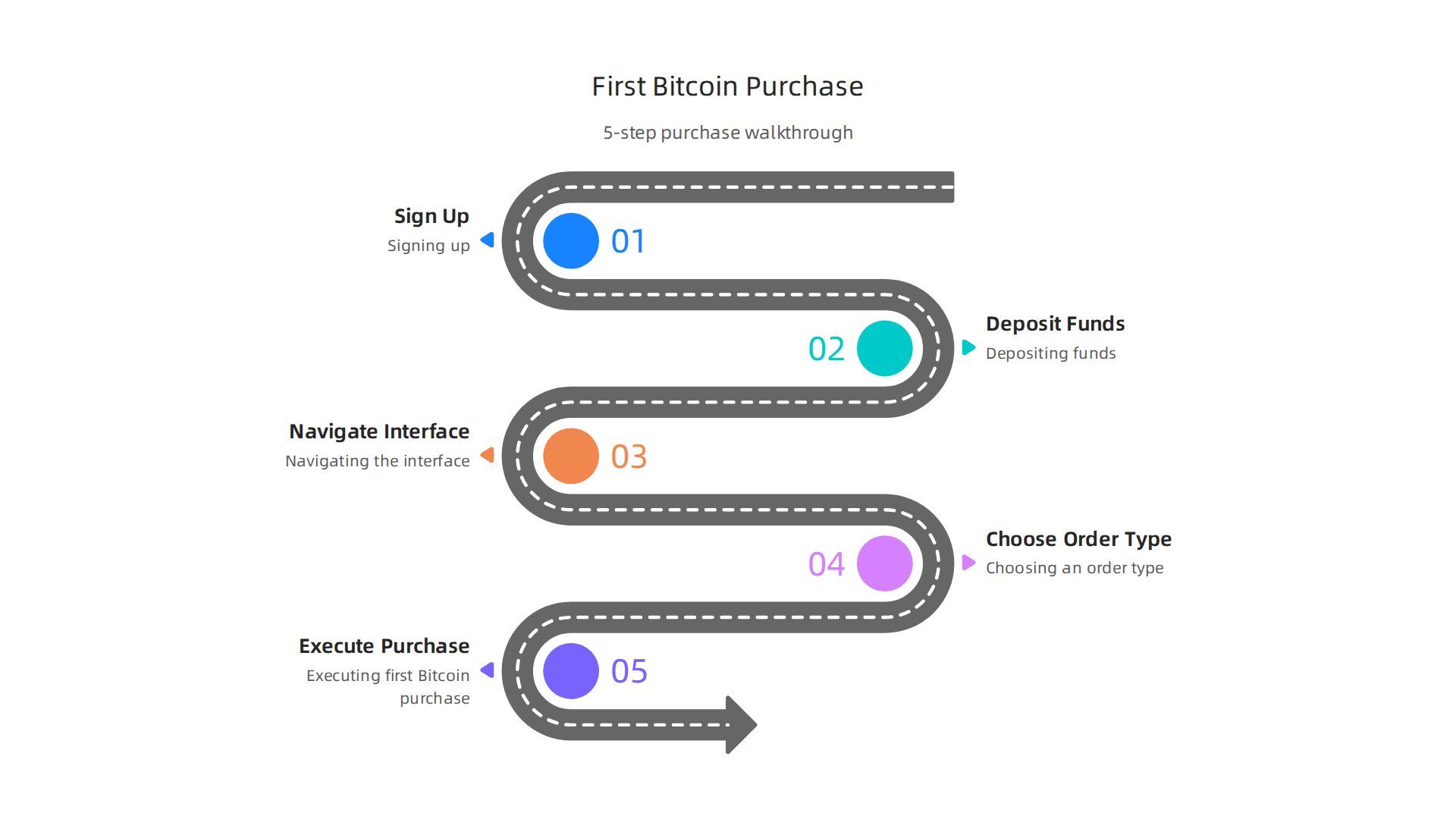
Step 1: Sign Up and Verify Your Account
Go to your chosen exchange’s website or app and click "Sign Up." You’ll need an email and a strong password. Next comes "Know Your Customer" (KYC). This is a global safety rule. You’ll upload a photo of your government ID and sometimes a selfie. It might feel intrusive, but it protects everyone on the platform. As noted in a beginner’s guide from Charles Schwab, taking these security steps seriously is foundational for safe participation. Approval can take a few minutes or a couple of days.
Step 2: Deposit Funds (Your Trading Fuel)
Before you can buy Bitcoin, you need to fund your account with traditional money, like US dollars. Look for a button that says "Deposit" or "Add Funds." You can usually connect a bank account, use a debit card, or initiate a wire transfer. Card deposits are fast but often have higher fees. Bank transfers are cheaper but slower. Start with a small amount you’re comfortable with.
Step 3: Navigate to the Trading Interface
Find the section labeled "Trade," "Buy/Sell," or "Markets." Here, you’ll see a list of cryptocurrencies. Select Bitcoin (BTC). You’ll see its current price and a simple order form. If the interface feels confusing, revisit the Safety First Checklist to confirm your platform has the beginner-friendly features you need.
Step 4: Understand Your Order Type
This is where you learn how to start trading. You’ll choose how to buy:
- Market Order: This means "buy at the best available price right now." It’s fast and simple. You specify the amount of money you want to spend, and the exchange buys as much Bitcoin as it can at the current market price.
- Limit Order: This means "only buy if the price reaches my target." You set the maximum price you’re willing to pay per Bitcoin. Your order waits until the market hits that price. It gives you more control but isn’t instant.
The difference between the buy and sell price is called the spread. For your first trade, a market order is perfectly fine.
Step 5: Review and Execute Your Trade
Enter the dollar amount you want to spend. The platform will show you the estimated amount of Bitcoin you’ll receive and all applicable fees. Fees are how the exchange makes money. Always check this final summary! If everything looks good, click "Buy," "Place Order," or "Confirm." That’s it. You’ve just made your first trade.
What Happens Next?
- Confirmation: The exchange will process your order. For a market order, this is nearly instant. You’ll see a confirmation screen and receive an email.
- View Your Balance: Go to your account’s portfolio or wallet section. You should now see your Bitcoin balance listed alongside the value in your local currency.
- The Bitcoin is in Your Exchange Account: Remember, your Bitcoin is now held by the exchange (in their custody). For long-term holding, you’ll eventually want to learn about moving it to your own private wallet for maximum security.
The whole process, from sign-up to purchase, can often be done in under 30 minutes for verified accounts, as highlighted in modern guides on how to invest in Bitcoin.
Learning how to trade is a journey. Getting clear, regular guidance makes each step less intimidating. For simple, ongoing tips that break down topics like order types, fees, and security, the free Clicks and Trades newsletter is a great, no-pressure resource.
Ready to take this step with confidence?
Sign Up for straightforward guides that help you make safe, smart choices from day one.
Beyond Buying: Simple, Low-Risk Strategies for Beginners
So you’ve made your first purchase. You see Bitcoin sitting in your exchange account. Now what? For a beginner, learning how to trade doesn’t mean you have to stare at charts all day. In fact, the smartest moves are often the simplest and least stressful.
Here are three peaceful, low-effort strategies that focus on building your position safely over time, rather than trying to win big overnight.
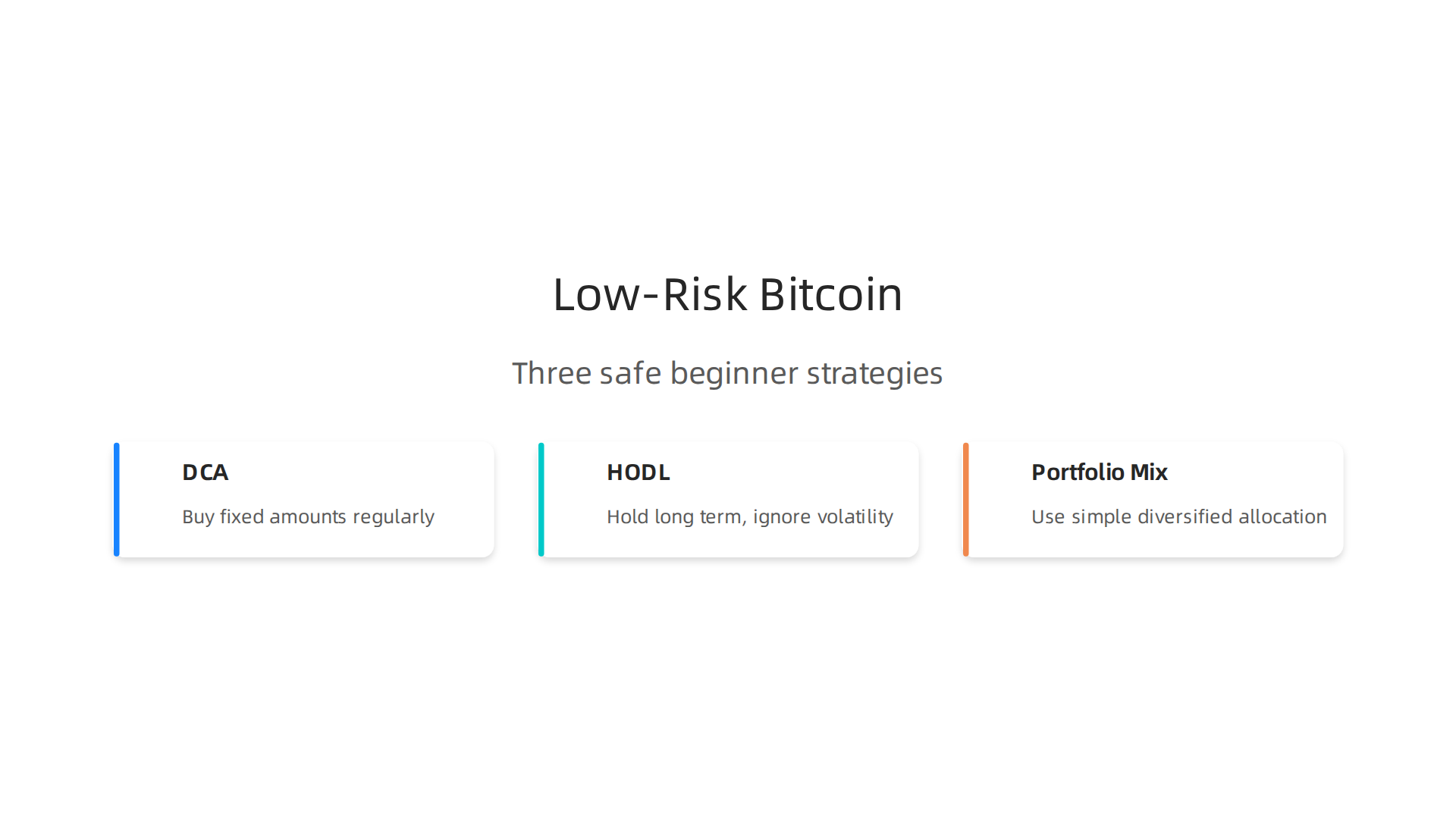
Strategy 1: Dollar-Cost Averaging (DCA) – Your "Set and Forget" Plan
Trying to time the market is hard, even for experts. Dollar-Cost Averaging (DCA) removes the guesswork. You invest a fixed amount of money at regular intervals, like $50 every week, no matter what the price is.
- How it works: Sometimes you buy when the price is high. Sometimes you buy when it’s low. Over time, this averages out your purchase price. You build your investment automatically, like a savings plan.
- Why it’s perfect for beginners: It’s disciplined, it’s emotionless, and it’s proven to be a safe long-term strategy. A 2026 analysis even called dollar-cost averaging Bitcoin the "safest strategy for long-term gains" because it smooths out market volatility.
- How to set it up: Many exchanges offer automatic recurring buys. You can schedule a purchase for every payday. To see how powerful this strategy can be, you can use a Bitcoin DCA calculator to backtest different plans. Understanding what these tools can and cannot predict is key, which is covered in our guide on what a crypto calculator does and doesn’t do.
This is the opposite of frantic day trade behavior. It’s a calm, consistent way to start trading.
Strategy 2: Embrace the "HODL" Mindset (Hold On for Dear Life)
In crypto, "HODL" is more than a meme. It’s a philosophy of patience. After you buy, your instinct might be to check the price every hour. If it drops, you might panic and sell. If it jumps, you might be tempted to cash out immediately.
The HODL mindset asks you to resist those urges. It means buying quality assets with a long-term belief and holding through the ups and downs. History shows that patient holders of Bitcoin have been rewarded more often than not, especially when compared to those who try to constantly buy and sell.
This is crucial because if you do start actively trading, you could be classified as a pattern day trader by regulators, which comes with specific rules and risks. For most beginners, adopting a simple "buy and hold" approach avoids this complexity entirely and is often more profitable over the years.
Strategy 3: Smart Portfolio Allocation – Don’t Put All Your Eggs in One Basket
This might be the most important strategy of all. How to trade responsibly starts with how you allocate your money. Bitcoin should only ever be one part of your overall financial picture.
Think of your total investment portfolio as a pie. Bitcoin is just one slice. The rest should be in more traditional, stable assets that match your goals and risk tolerance.
| Portfolio Component | Example Allocation for a Beginner | Purpose |
|---|---|---|
| Emergency Savings | 30-40% | Cash in a savings account for life’s surprises. |
| Traditional Investments | 40-50% | Retirement funds (401k, IRA), index funds, stocks. |
| Bitcoin / Crypto | 5-10% | The growth-oriented, higher-risk portion of your plan. |
Starting with a small percentage, like 5%, keeps your risk manageable. As you learn more and get comfortable, you can adjust. This disciplined approach prevents the heartache of losing money you can’t afford to lose and keeps your overall financial plan on track.
Learning doesn’t stop after your first buy. Getting clear, regular guidance turns confusion into confidence. For simple explanations of strategies like DCA and portfolio planning, the free Clicks and Trades newsletter is a great resource that breaks it all down without the hype.
Ready to build your Bitcoin strategy with confidence?
Sign Up for straightforward tips that help you invest smarter, not harder.
Understanding Risk: What You’re Really Signing Up For
You’ve learned some calm, steady strategies. That’s a great start. But here’s a common next step: the temptation to speed things up. You might see a big price jump and think, "What if I bought more right before that?" Or you hear about someone making a quick profit and wonder if you should try day trade tactics.
This is the moment where how to start trading shifts from a learning exercise to a real risk management test. Before you go any further, you need to understand exactly what you’re dealing with. Trading isn’t just about making money. It’s about not losing money you can’t afford to lose.
Let’s break down the three non-negotiable rules for managing risk.
1. Volatility is Normal. Your Reaction Should Be, Too.
Bitcoin’s price moves. A lot. It can swing 10% or more in a single day. If you’re not prepared for that, your emotions will take over. You’ll panic-sell during a dip or get greedy during a spike.
The key is to expect the swings. When you see a big red number, remember it’s a normal part of the journey. This is why strategies like Dollar-Cost Averaging (DCA) are so powerful for beginners. By investing a fixed amount regularly, you stop worrying about daily price moves. A 2026 analysis confirmed that DCA is considered the "safest strategy for long-term gains" in Bitcoin because it removes emotion from the equation. Tools like a Bitcoin DCA calculator can show you how steady investing smooths out those wild volatility bumps over time.
2. The "Can You Afford to Lose It?" Principle
This is the most important question you will ever ask yourself. The money you use to learn how to trade should be risk capital.
What is risk capital? It’s money that, if lost completely, would not:
- Affect your ability to pay rent or your mortgage.
- Change your grocery budget.
- Impact your emergency savings.
- Delay any important life goals.
If losing this money would keep you up at night or force you to make hard choices, it is not risk capital. It’s essential money. Never trade with essential money. Start only with an amount that feels like you’re paying for an education—because you are.
3. Avoid the "Advanced" Traps: Leverage and Complex Products
Exchanges love to offer flashy tools with names like "leverage," "futures," or "options." As a beginner, your job is to ignore them completely.
- Leverage (or margin trading) lets you borrow money to place a bigger trade. It can amplify your gains, but it amplifies your losses even faster. You can lose more money than you originally put in. This is the opposite of safe.
- Futures and Options are complex contracts based on predicting future prices. They have deadlines and intricate rules that are easy to misunderstand.
These are tools for experienced, professional traders who can afford significant losses. Using them as a beginner is like trying to fly a jet before you’ve learned to ride a bike. Stick to simple "spot" trading—buying and selling the actual asset—until you have years of experience.
A critical part of staying safe is choosing the right place to execute your trades. Always do your homework on any platform. For a straightforward checklist on what makes a trading platform safe and trustworthy, review our guide on how to judge a trading platform.
The biggest risk isn’t the market going down. It’s you being unprepared for it. Getting clear, regular guidance is the best way to turn risk into understanding.
For simple, ongoing lessons that help you navigate these waters safely, the free Clicks and Trades newsletter breaks down complex topics into actionable, hype-free advice.
Ready to make sure your trading journey is built on a solid foundation?
Sign Up for tips that help you learn how to trade with your eyes wide open to risk.
Navigating the Information Jungle: How to Keep Learning Safely
You’ve got a handle on risk. That’s a huge first step. Now, you need to know what to learn next and who to trust. The internet is full of people shouting about the next big thing. Your job is to find the quiet, helpful voices.
In 2026, learning how to trade safely means learning how to spot scams first. Authorities like the FBI warn that crypto scams are a massive problem, driving billions in losses as sophisticated fraud grows. You need to build a filter to separate real education from dangerous noise.
Here is a simple, three-part plan to build your own safe learning path.
1. Vet Every Source: Choose Education Over Hype
Before you trust any tip, ask these questions:
- Is it trying to sell you something? A "guaranteed win" or a secret group you must pay to join is a major red flag.
- Does it explain the "why"? Good teachers explain concepts. Scammers just tell you what to buy.
- Is the person or platform transparent? Look for real names, clear histories, and contact information. An anonymous "guru" with wild promises is not a teacher.
Trust sources that want you to understand, not just act. A great place to start is by learning how to judge a trading platform. The same principles of transparency and security apply to information sources.
2. Build a Shortlist of Trusted Resource Types
Stick to these kinds of places for your core learning. They are less flashy but far more reliable.
- Official Documentation: Start with the source. Read the white papers or official help pages for the assets you’re interested in. It’s the purest form of information.
- Long-Standing Community Forums: Find communities that are years old, not days old. Look for discussions where people debate ideas and share mistakes, not just profits.
- Academic & Analytical Papers: Research from universities or established analysis firms provides data-driven insights, not just opinions. For example, the 2026 Crypto Crime Report from Chainalysis details real scam trends, which is more useful than fear-based headlines.
3. Set Up Your Simple Information Diet
You can’t watch every video and read every tweet. It will overwhelm you and lead to bad decisions. Here’s a healthy plan:
- Pick 2-3 Core Sources: Choose one educational newsletter, one reliable forum, and one analytical site. That’s it for your daily check.
- Schedule Your Learning: Don’t check prices or news all day. Set aside 30 minutes in the morning or evening to review your core sources. This stops you from reacting to every market whim.
- Unfollow the Hype: If a source constantly uses words like "MOON" or "FUD" or gives you a panicky feeling, mute it. Your goal is calm understanding, not excitement.
The best way to stick to a good diet is with regular, sensible guidance. For a steady stream of clear, hype-free lessons that help you learn how to start trading the right way, subscribe to the free Clicks and Trades newsletter. It breaks down complex topics into steps you can actually use.
Ready to build your knowledge on a solid, scam-free foundation?
Sign Up for straightforward tips that help you learn how to trade with confidence, not confusion.
Common Scams and Pitfalls: How to Protect Yourself
You’ve learned how to find good information. That’s your shield. Now, you need to know what the arrows look like. Scammers are experts at targeting new traders. Their goal is to use your excitement about learning how to trade against you.
The numbers are shocking. In 2025, Americans lost over $20 billion to online scams, a huge chunk of that from crypto fraud. The FBI’s 2026 crime report shows this isn’t slowing down. Protecting yourself isn’t just careful, it’s critical.
Let’s break down the most common traps so you can spot and avoid them.

1. The Phishing Hook: Fake Sites & Fake Friends
Phishing is when a scammer pretends to be someone you trust to steal your login details or money. It’s not just bad emails anymore.
- Fake Websites: These look identical to your real exchange or wallet site. You might click a link in a message, log in, and give your password directly to a thief. Always type the website address yourself or use a trusted bookmark.
- Impersonation: Scammers create social media profiles or send messages pretending to be customer support, a famous trader, or even a friend. They’ll say your account has a problem and they need your "seed phrase" or password to fix it. Real support will never ask for this.
- Social Engineering: This is a fancy term for manipulating you. They might build a fake friendship over weeks before asking for money or account "help."
2. The "Too Good to Be True" Promise
If an offer makes your heart race with excitement, your brain should scream "danger." This is the oldest trick, and it works.
- Fake Investment Schemes: These promise guaranteed, sky-high returns with no risk. They might call it a "proprietary trading" opportunity or a secret day trade bot. You send crypto, see fake profits on a dashboard, but can never withdraw your money.
- Pump-and-Dump Groups: You’re told to buy a specific, unknown coin at a specific time. The organizers "pump" the price by buying first and hyping it, then "dump" their coins at the peak, leaving everyone else with worthless assets. This is illegal market manipulation.
- Giveaway Scams: "Send 1 ETH to this address and get 2 ETH back!" It’s a simple lie. No legitimate project runs giveaways where you have to send money first.
3. Your Most Important Habit: Verify, Then Verify Again
A single wrong character can send your money into the void, forever. Meticulous checking is your superpower.
- Wallet Addresses: Always double-check the full address before sending any crypto. Copy and paste it, then visually compare the first and last few characters. Scammers use malware to change the address in your clipboard when you paste.
- Transaction Details: Before you finalize any trade or transfer, pause. Check the amount, the fee, and the destination network. Rushing causes the costliest mistakes, especially around a trading deadline or in after market trading hours when you might be less focused.
Staying safe is an ongoing skill. For a steady stream of clear, scam-aware lessons that help you learn how to start trading on solid ground, subscribe to the free Clicks and Trades newsletter. It delivers practical safety tips right to your inbox.
Building this habit of verification starts with using secure platforms. Our Safety First Checklist walks you through exactly what to look for.
Ready to trade with more confidence and less fear?
Sign Up for straightforward guidance that helps you build your skills safely, one step at a time.
Summary
This article is a practical, safety-first introduction to learning how to trade Bitcoin for complete beginners. It explains the basic actions of buying, selling, and holding, contrasts long-term investing (buy-and-hold) with active trading, and recommends starting with low-risk approaches like dollar-cost averaging and self-custody. The guide walks you through non-negotiable security steps—strong passwords, 2FA, and how to choose a trustworthy exchange—then gives a simple five-step recipe to make your first Bitcoin purchase. It also covers risk management rules (only use risk capital, avoid leverage), how to spot scams and phishing, and how to build a reliable learning routine. By reading this, you’ll know how to set up accounts securely, place a first trade responsibly, protect your assets, and continue learning without falling for hype.
